If you’ve been around for a while on homeschool blogs, Pinterest or other social media, you may have heard about reverse planning. When I first read about it, I was a skeptic; but after it saved our homeschool, I am a believer! If you feel like your homeschool is running you and your family into the ground, keep reading to learn about reverse planning and see if you too can salvage your homeschool and sanity.
What is Reverse Planning?
Before going further, I need to explain the (very simple) process of reverse planning, so that we are all on the same page. Reverse planning is a “planning” method where you write down what you accomplished for the day AFTER it’s been completed, rather than planning your homeschool day out in advance. It doesn’t have to be fancy record keeping unless you want it to be. I’ve seen people use gorgeous planners, 1 subject notebooks, google docs, and 3-ring binders. They all get the job done. Just pick something to use as your main record keeping resource for the school year, find the date (or write it in), and write down what your kids accomplished. Easy peasy.
Now, I’m a type A planner gal. This method, although very straightforward, did not sit well with me at first. How would I know what to do each day if I didn’t plan it out ahead of time? What if I missed key learning because I didn’t plan it out? The fear of getting it all wrong held me back. But the key here is to create some kind of rhythm for your homeschool. Maybe you use an open and go style curriculum; then your daily rhythm is to do the next lesson. Maybe you need to use a loop system; just pick the next item on the loop and go from there. Maybe you use unit studies; cover a lesson, spend time on the extracurricular portions and tackle the next lesson when you’re ready. Unless you are creating your own curriculum where you DO need to plan ahead in advance, you can probably find a way to create your own rhythm and let go of the fears.
Reverse planning doesn’t cause you to feel behind when you are sick or when your spouse has a vehicle emergency (true story). It doesn’t make you feel pressured to spend the entire Saturday catching up from the things missed during the week. It doesn’t make you feel the need to interrupt your child’s independent learning when they take an interest in something outside the curriculum. You’ll get what you need done, and you’ll have less pressure in the process.
Homeschool Before Reverse Planning
Before starting reverse planning, my monthly routine looked a bit like this:
- Beginning of month, decide where we should be by the end of the month.
- Add in all extra things like field trips, library books, songs, games, documentaries, etc.
- Cram it all into each week, ignoring the family appointments already scheduled.
- Freak out at the end of the month because we were way behind!!
This added so much stress to our home, our homeschool, the kids and me! Then it only got worse when we found out I was pregnant. Morning sickness and exhaustion took over and it seemed like we would never catch up. I needed a change. I needed something flexible that would work around pregnancy symptoms and doctor’s appointments. I needed reverse planning; and thankfully, it came back up in my pinterest feed.
Trying Reverse Planning and the Results
I told y’all, I’m a type A planner gal. So, it was still a struggle for me to try this, even though I knew that my current planning system wasn’t working for me. I told myself that I would give it one month. If it wasn’t working for us after a month, then I would drop it and try something else. I created loops for language arts and math and kept the existing electives loop that we already use. Reading, writing, history and science are done with open and go curriculums, so we would just do the next lesson each day.
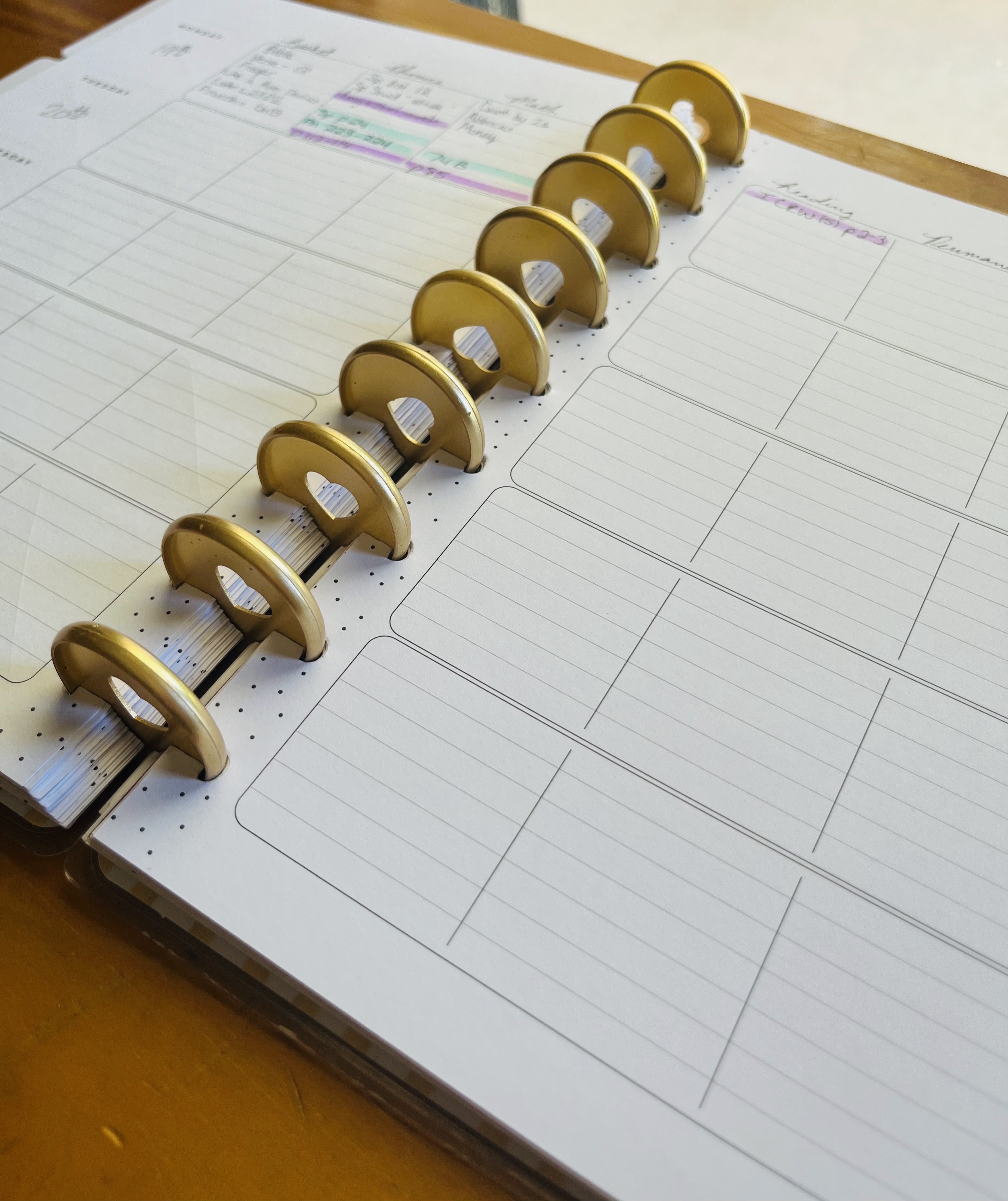
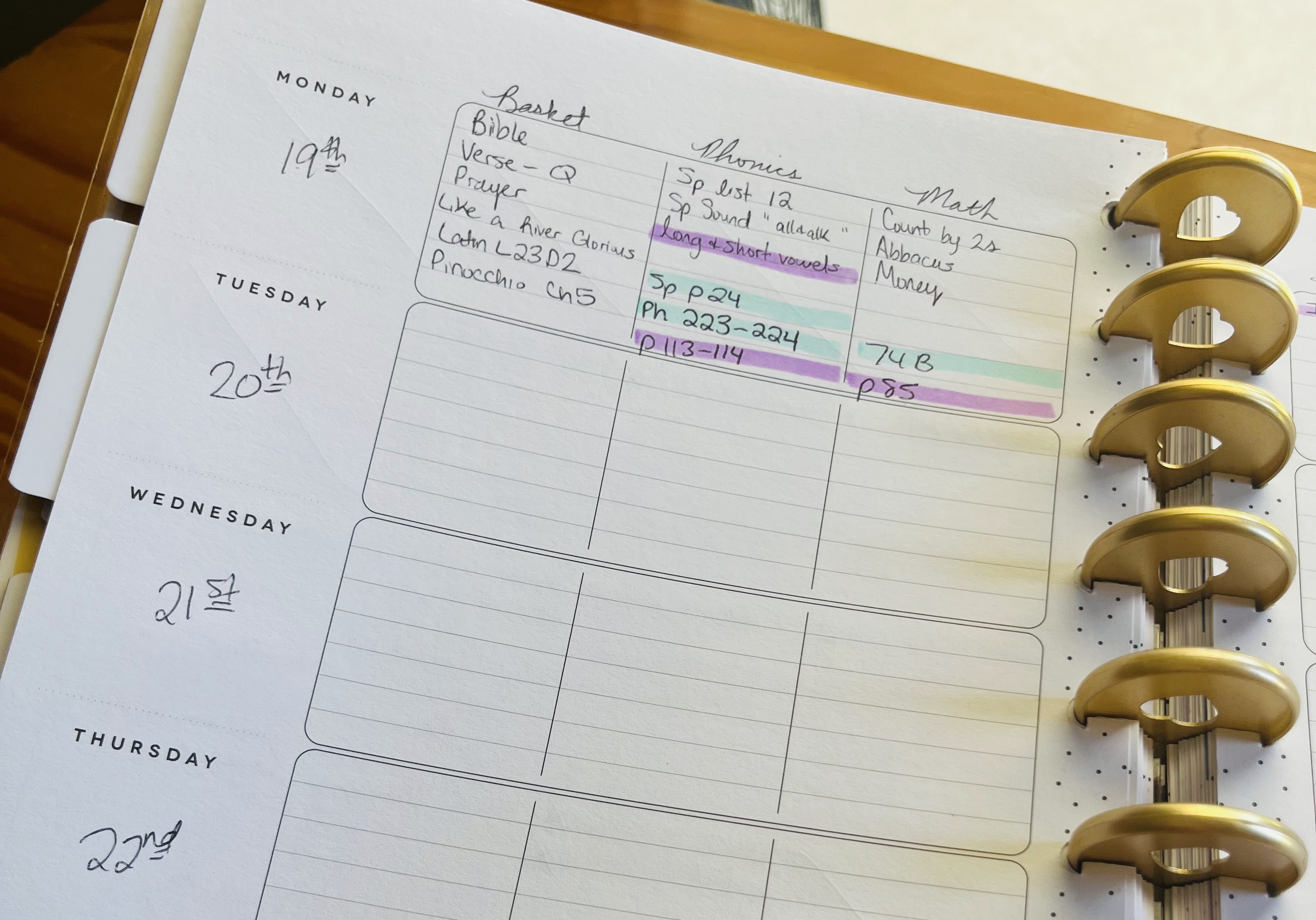
I kept my existing Happy Planner and wrote the loops out on sticky notes that I attach to each child’s folder (fancy, I know). On day 1, I was so tired, I knew we would only be able to do about an hour of school before I needed to go crash. We were able to cover our basket time, phonics, math, and reading – in a little over an hour! For phonics and math, I picked 3 items from their respective loops and assigned a worksheet for both kids to complete. When the hour was up, I wrote down what we did. And we were done! There was no increasingly long plan staring back at me to remind me that I had again failed. I didn’t have to plan to double up on science and history the next day (in fact, on day two I was incredibly sick, and we didn’t do school at all). On day 3, we started by completing the subjects we didn’t get to on day 1: basket time, writing, electives, history and science. And because I was feeling well, we even made it back around to do a small phonics and math lesson!
As I progress further into pregnancy and eventually have an infant to take care of during our homeschool time, I know that reverse planning is going to be the thing that takes some of the stress away. And though the original plan was to try it for one month, it’s here to stay for the foreseeable future. I cannot believe how much the atmosphere of our home has changed with just this one change! So if you’ve been on the fence, or if your drowning in your homeschool, I encourage you to take the plunge. Just for one month, give reverse planning a try and see if this is the thing your homeschool has been missing.
If you do reverse planning or use another planning strategy, I’d love to know! Let me know in the comments. Happy Homeschooling!

 Cassie at Home
Leave a comment